Back to Blog
YouTube Management Service
Is a YouTube Channel Management Service Worth It?
Direct Answer
A YouTube channel management service is worth it when the cost of outsourcing is lower than the opportunity cost of your time spent on manual optimization.

Is a YouTube Channel Management Service Worth It for Small Creators?
A YouTube channel management service is worth the investment for a small creator only when the time saved on administrative tasks, metadata optimization, and data analysis allows for a measurable increase in content production or higher-value strategic pivots. If you are currently spending more than 10 hours per week on non-creative tasks like thumbnail A/B testing, SEO keyword research, and community moderation, outsourcing these functions typically provides a positive return on investment by allowing you to focus on the core creative work that drives actual channel growth.
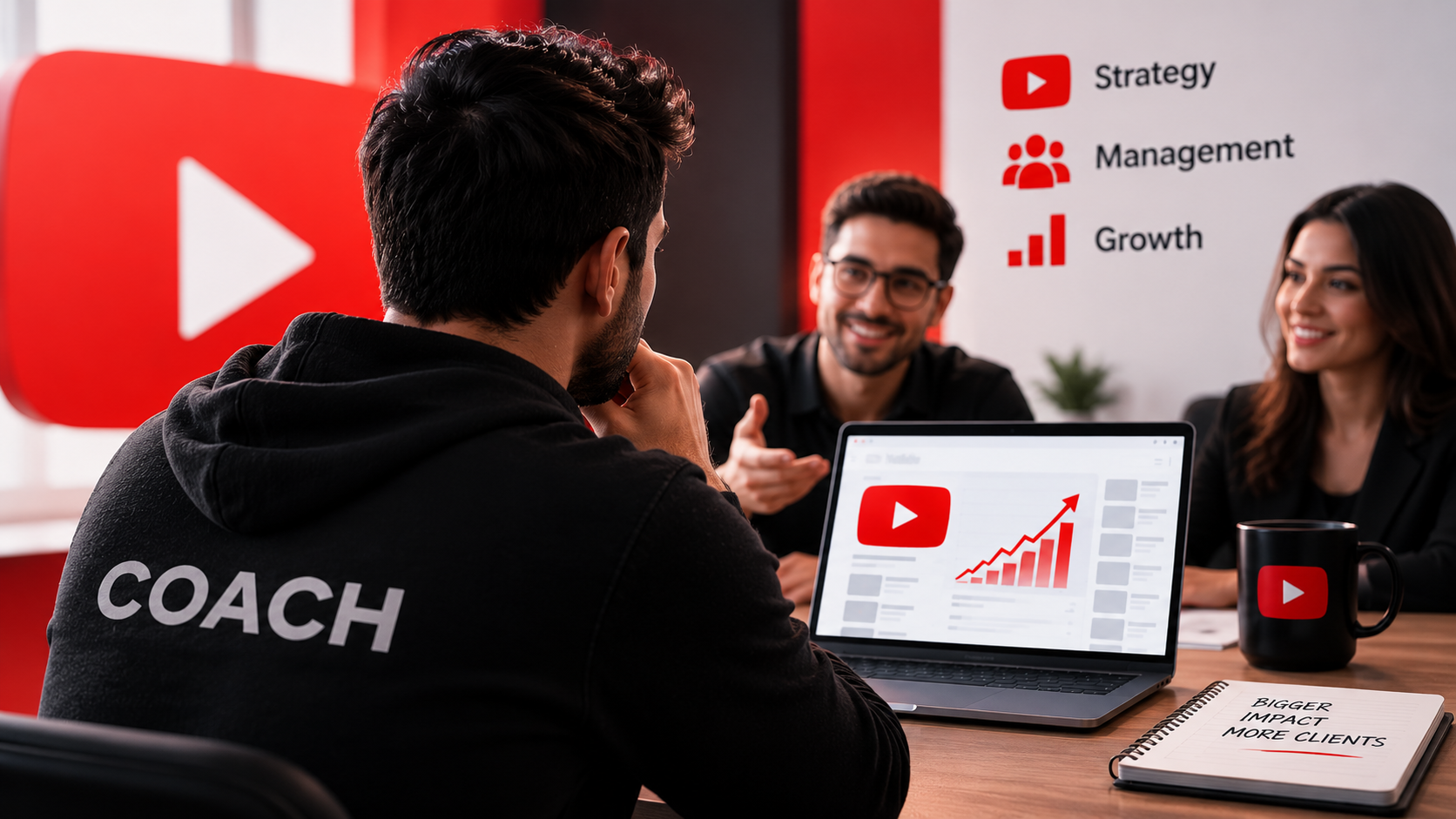
Many creators reach a plateau where they know they need to improve, but they are too buried in the weeds of daily uploads to step back and analyze why their growth has stalled. This is where a YouTube channel management agency steps in. The value isn't just in having someone else do the work; it is in having someone else who understands the specific mechanics of the YouTube algorithm apply professional-grade rigor to your channel’s performance data.
Why do small creators struggle to scale independently?
The primary barrier for most small channels isn't a lack of effort; it is a lack of focus. YouTube is an ecosystem governed by two primary metrics: Click-Through Rate (CTR) and Average Percentage Viewed (APV). When you are a solo creator, you are often wearing five different hats: director, editor, copywriter, data analyst, and community manager. This fragmentation of attention usually results in mediocre execution across all five roles. You might have a great video concept, but if your packaging—the title and thumbnail—doesn't hit, the video dies in the browse features before anyone even sees your hard work.
Managing a channel effectively requires a consistent feedback loop. This means looking at your YouTube Studio analytics not just to see how many views you got, but to identify the exact second viewers drop off. If you have a 40% drop-off at the 0:12 mark of every video, you have a structural pacing problem. Most creators don't have the objective distance to spot these patterns. A professional management service acts as a mirror, showing you exactly where the audience is losing interest.
What does a professional YouTube management service actually do?
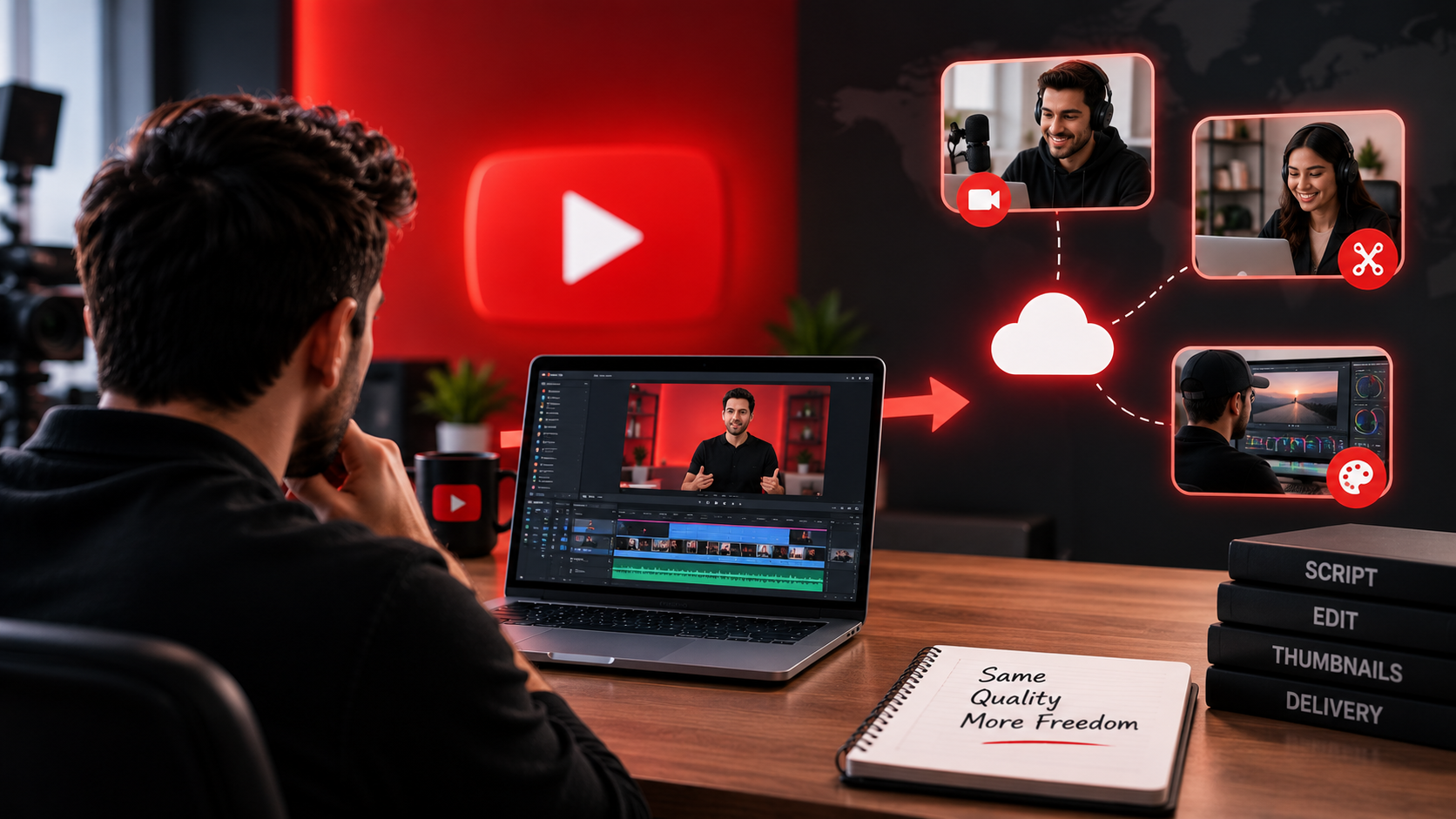
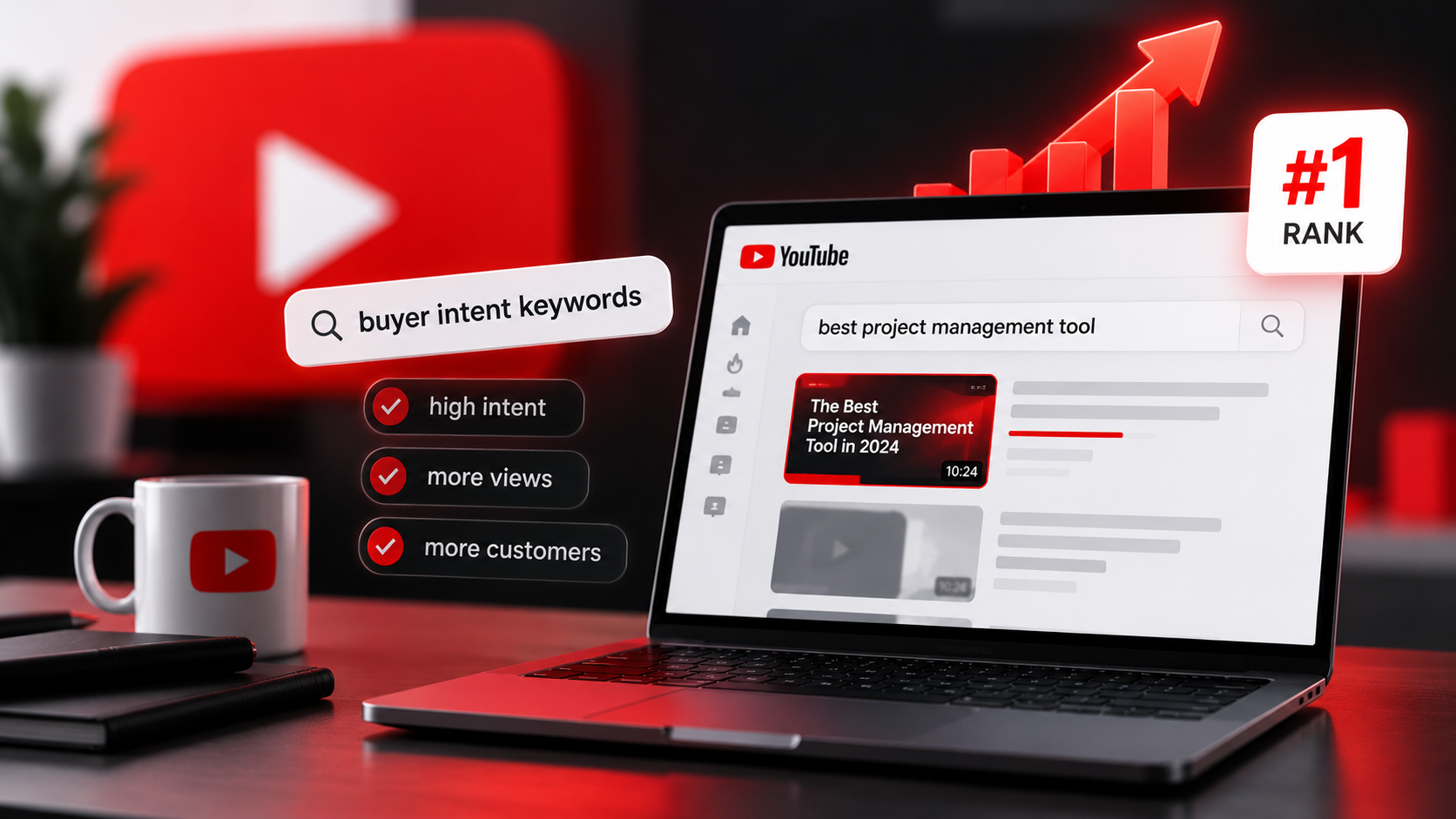
A legitimate YouTube management service doesn't just "post videos." They manage the entire lifecycle of your content. This starts with pre-production strategy. Before you even record, an agency will look at your niche, identify high-performing search queries, and help you structure your script to maximize retention. They aren't guessing; they are looking at what is already working for your competitors and finding the gap you can fill.
Once the video is filmed, the management process shifts to optimization. This includes crafting titles that are optimized for both the search engine and the human psychology behind clicking. It involves creating multiple thumbnail variations to test against your core audience. They also handle the technical side of YouTube, such as managing end screens, cards, and playlists to create a "binge loop." The goal is to keep the viewer on the platform, ideally moving from your video to another one of yours. This signals to the algorithm that your channel is a destination, not just a one-off stop.
How do you calculate the ROI of outsourcing?
To determine if you are ready to hire a service, you need to calculate your own hourly value. If you spend 15 hours a week managing your channel and your time is worth $50 an hour, you are essentially paying $750 a week in opportunity cost to manage your own channel. If a professional service costs less than that and can improve your CPM (Cost Per Mille) or increase your subscriber growth rate, the math becomes simple.
Beyond the raw time calculation, consider the "learning tax." How many hours have you spent watching tutorials on how to optimize tags or how to design thumbnails? While learning is valuable, it is an investment that takes you away from your primary production. A management agency already has the expertise. You aren't paying them to learn; you are paying them to execute. You can explore our YouTube growth services to see how we bridge this gap for creators who are ready to stop guessing and start growing.
What are the pros and cons of hiring a management agency?
Before committing, it is important to weigh the trade-offs of bringing in external help. There is no "magic button" in the creator economy, and outsourcing involves giving up a degree of control.
Want a free audit of your channel?
Get a personalized growth plan in 48 hours.
| Pros | Cons |
|---|---|
| Objective data analysis | Financial cost |
| Consistent publishing schedule | Loss of direct "in-the-weeds" control |
| Improved CTR through testing | Communication overhead |
| Strategic content planning | Finding a partner who understands your voice |
The biggest risk is hiring a firm that uses a "one-size-fits-all" template. Your channel has a specific voice and a specific audience. A good agency will work to amplify that voice, not replace it with generic "best practices" that might work for a gaming channel but fail for a financial education channel.
Expert Insight: The "Retention Floor"
Pro Tip: Focus on your "Retention Floor" rather than your "Viral Ceiling." Many small creators obsess over the video that might go viral, but the real path to growth is raising your average retention. If you can get your average viewer to stay 10% longer on every single video, you will see a compounding effect on your channel's total watch time that is far more valuable than a single lucky viral hit. A management service is most effective when they are tasked with raising this floor through rigorous pacing and editing feedback.
What are the common pitfalls when working with a manager?
The most common failure point in the creator-manager relationship is a lack of clear expectations. You cannot hand over your password and expect the channel to explode without your input. You still need to be the creative engine. The manager is the transmission; they take the power you generate and translate it into motion. If the creative quality isn't there, no amount of metadata optimization will save the video. If you are not willing to iterate on your content based on the data your manager provides, you are wasting your money.
Another pitfall is the "black box" approach. If your agency isn't showing you their work, explaining their decisions, and showing you the data behind their strategy, you are being sold a service rather than a partnership. Transparency is non-negotiable. You should have access to your own analytics and understand why a title was changed or why a thumbnail was updated. If you don't understand the "why," you aren't growing as a creator.
How to vet a YouTube channel management agency?
Don't just look for a portfolio of big numbers. Look for consistency. Can they show you a channel in a similar niche that has grown steadily over 12 months? Anyone can get lucky with one video. It takes a real system to grow a channel month over month. Ask them about their process for handling negative feedback or low-performing videos. Do they have a protocol for "post-mortems"? A good agency doesn't hide from a flop; they analyze it to make sure it doesn't happen again.
Check if they have experience with the specific tools you use. Are they familiar with current YouTube policy changes? Are they using legitimate, TOS-compliant (Terms of Service) methods, or are they promising "guaranteed views"? Avoid anyone who promises "guaranteed" results. YouTube is a platform of variables; an honest agency promises a process for optimization, not a specific view count.
Key Takeaways
- Small creators should outsource once the time cost of administration outweighs the cost of professional management.
- Effective management is about raising your "retention floor" through data-driven content adjustments.
- Transparency is vital; you should always know the "why" behind your manager's strategic decisions.
- Avoid any service that guarantees specific view counts, as these often violate platform terms.
- Your role remains the creative engine; the management agency is the transmission that converts that creativity into consistent growth.
Ultimately, the decision to hire a management agency is a signal that you are treating your channel as a business. It marks the transition from hobbyist to professional. If you have the creative output and the desire to grow but lack the time or the analytical expertise to optimize your presence, it is a logical next step. When you are ready to stop managing the minutiae and start focusing on the big-picture growth of your brand, our team at Centrics Media is here to help. You can learn more about our approach to YouTube channel management and how we handle the heavy lifting for our clients.
Frequently Asked Questions
How long does it typically take to see results from a management service?
You should expect to see improvements in click-through rates and audience retention within 30 to 60 days, as these are the immediate results of better metadata and pacing. Subscriber growth and total watch time are lagging indicators that typically show significant, compounding gains after 3 to 6 months of consistent application.
Do I still need to be involved in the creative process?
Yes, you remain the creative lead. A management service handles the optimization, analytics, and strategy, but they rely on your unique perspective, expertise, and on-camera presence to produce the actual content that the audience connects with.
Is it better to hire a freelancer or an agency?
An agency typically provides a broader range of expertise—from SEO and design to data analysis—and offers more stability than a single freelancer. Agencies also have established systems and internal protocols that ensure your channel continues to perform even if one individual team member is unavailable.
What should I do if a manager suggests a direction I don't like?
View the suggestion as a hypothesis based on data. Ask the manager to explain the data supporting their recommendation, and if you are still uncomfortable, ask for an A/B test to see if their theory actually holds up with your specific audience without fully committing to a new direction.
youtube growth management service
Was this article helpful?
Ready to Grow Your YouTube Channel?
Get a clear strategy tailored to your channel — backed by data from 200+ channels we've scaled.
Book Free Growth Audit