Back to Blog
YouTube Channel Management
Mastering YouTube Channel Management for Growth
Direct Answer
Learn the strategic pillars of professional YouTube channel management, from SEO optimization to audience retention tactics that drive sustainable growth.
What is professional YouTube channel management?
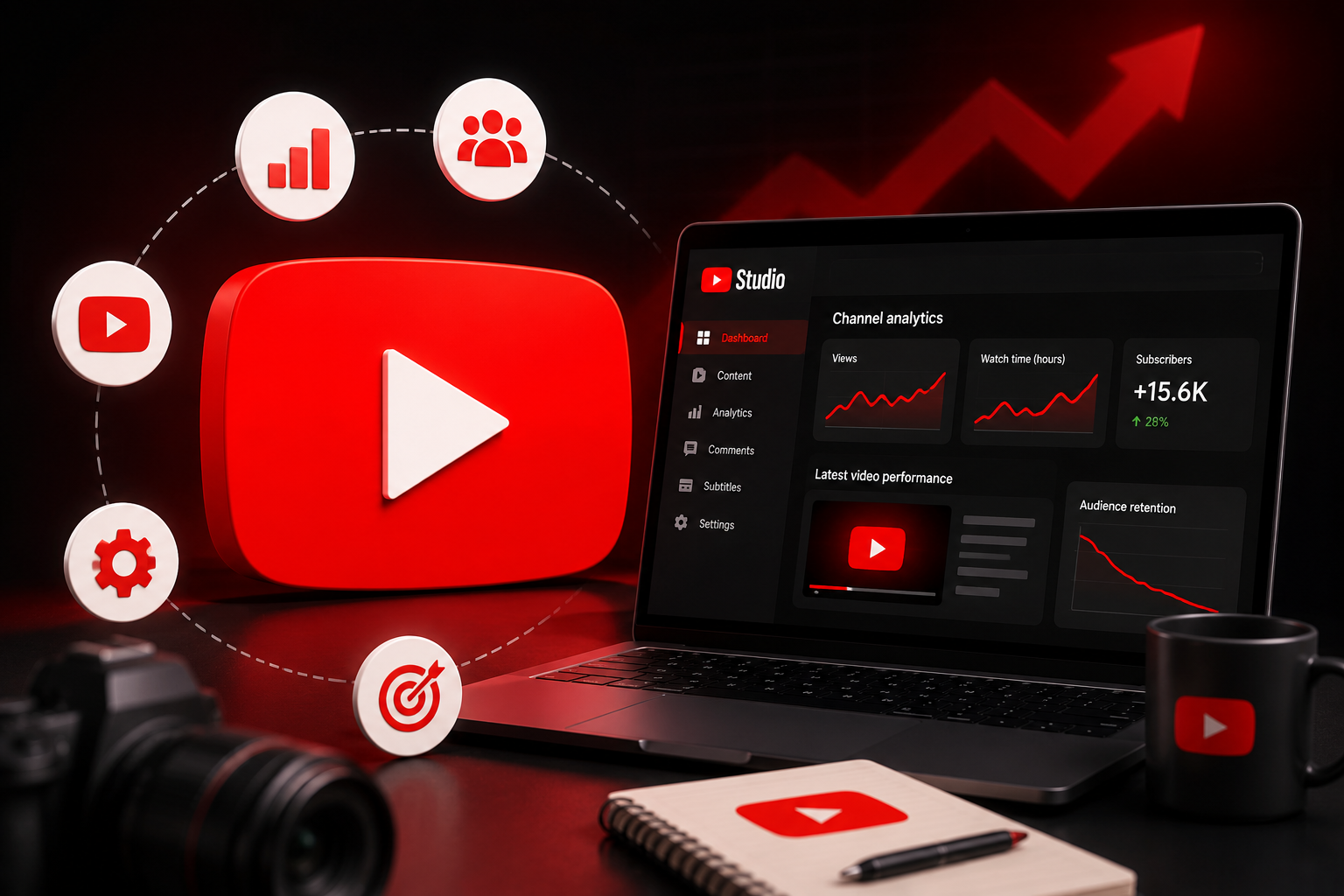
YouTube channel management is the systematic process of planning, executing, and optimizing a video content strategy to maximize audience engagement, subscriber retention, and long-term visibility. It involves a continuous cycle of data analysis, metadata refinement, and community interaction to ensure that every upload aligns with the platform’s evolving recommendation algorithms.
Many creators view YouTube as a simple video hosting site, but successful channels treat it as a search engine and a social network simultaneously. Managing a channel effectively means moving beyond the "upload and hope" mentality. It requires a deep understanding of how the YouTube algorithm prioritizes watch time, click-through rates (CTR), and viewer satisfaction. When you manage a channel with professional rigor, you aren't just making videos; you are building a digital asset that compounds in value over time.
At Centrics Media, we view this process as a three-legged stool: technical optimization, creative strategy, and data-driven iteration. If one leg is missing, the entire structure of your channel growth becomes unstable. Below, we break down exactly how to manage these components to move the needle on your key performance indicators.
Key Takeaways
- YouTube success is driven by a combination of high-intent SEO and high-engagement creative strategy.
- Data analysis should dictate your content calendar, not just gut feeling or trends.
- Consistency in branding and publishing frequency is essential for algorithm trust.
- Professional management involves active community engagement to foster long-term loyalty.
How does YouTube SEO impact your channel?
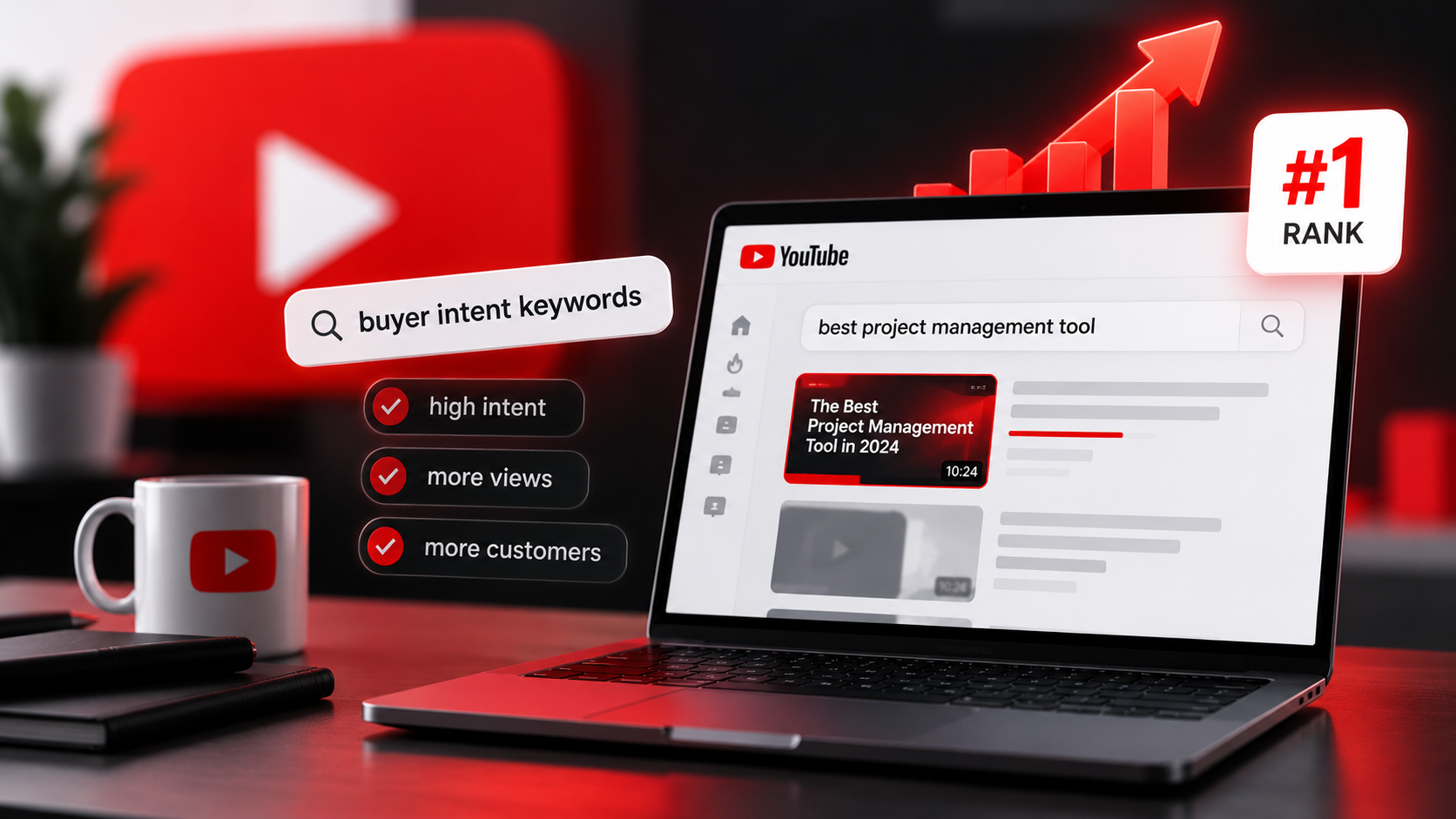
YouTube SEO is the practice of optimizing your channel’s metadata—titles, descriptions, tags, and closed captions—to help the platform’s algorithm understand the context of your content. When you master YouTube SEO, you aren't just hoping for a viral hit; you are ensuring that your videos appear in search results for high-intent queries, which provides a steady stream of evergreen traffic.
The algorithm uses your metadata to categorize your video and match it with the right viewers. If your title is vague or your description lacks relevant keywords, the algorithm struggles to place your content in front of the people who are actually looking for it. Effective SEO starts with keyword research. You need to identify the specific terms your target audience is typing into the search bar. Once identified, these keywords should be woven naturally into your titles and descriptions to signal relevance.
However, SEO is not just about keywords. It is also about the "click." A perfectly optimized video that no one clicks on will eventually stop being recommended. This is why your thumbnail and title must work in tandem with your SEO strategy. The SEO gets the video in front of the right eyes, but the creative packaging gets the viewer to click. If you are struggling to balance these elements, our YouTube growth management services are designed to bridge the gap between technical search requirements and audience-grabbing creative.
What are the core pillars of YouTube channel growth?
Sustainable growth on YouTube is rarely the result of a single viral video. Instead, it is the byproduct of consistent, high-quality output that keeps viewers coming back. To achieve this, you must focus on three core pillars: Audience Retention, Click-Through Rate (CTR), and Community Building.
1. Maximizing Audience Retention
Audience retention is the single most important metric for the YouTube algorithm. If viewers drop off within the first 30 seconds, the algorithm assumes your video is not delivering on the promise made by your thumbnail and title. To improve retention, you must front-load your value. Avoid long, drawn-out intros that don't provide immediate context. Get straight to the point, establish the premise, and keep the pacing tight. Use visual cues, B-roll, and pattern interrupts to keep the viewer’s brain engaged throughout the duration of the video.
2. Optimizing Click-Through Rate (CTR)
Your CTR is the percentage of people who click on your video after seeing it in their feed. A high CTR tells YouTube that your content is compelling. To boost this, your thumbnails must be high-contrast, easy to read on mobile devices, and emotionally resonant. Your titles should create a "curiosity gap"—they should promise a specific benefit or answer a burning question without being misleading. Misleading titles (clickbait) might get a click, but they will destroy your retention, which ultimately hurts your channel more than a low CTR would.
3. Building a Community
YouTube is a social platform. The more you interact with your audience, the more they feel invested in your success. Respond to comments, pin the best ones, and use the Community Tab to poll your subscribers on what they want to see next. This feedback loop is invaluable for content planning. When your audience feels heard, they are more likely to share your content and return for future uploads.
Expert Insight: Don't look at your analytics in a vacuum. If you see a massive drop-off at the 2-minute mark, don't just note it—watch that specific segment of your video. Is the audio quality dipping? Did you go on a tangent? Is the pacing too slow? Often, the data points to a specific creative flaw that you can fix in your next edit. Use your analytics as a diagnostic tool, not just a scoreboard.
Why should you consider professional YouTube growth services?
Managing a channel is a full-time job. It requires a blend of creative direction, technical SEO, data analysis, and community management. Many creators reach a plateau because they are trying to do everything themselves, leading to burnout and inconsistent quality. This is where YouTube growth services provide a significant advantage.
Professional management allows you to focus on what you do best—creating content—while a team of experts handles the technical heavy lifting. This includes A/B testing thumbnails, refining metadata, analyzing audience demographics, and optimizing your upload schedule. By outsourcing these tasks, you ensure that your channel is always operating at peak efficiency, regardless of your personal bandwidth.
| Feature | DIY Management | Professional Management |
|---|---|---|
| Keyword Strategy | Guesswork/Basic Research | Data-Driven SEO Mapping |
| Thumbnail Design | Standard Templates | A/B Tested, High-CTR Designs |
| Analytics Review | Surface-level views | Deep-dive retention analysis |
| Content Planning | Reactive/Sporadic | Strategic Content Calendar |
How to scale your channel effectively?
Scaling a YouTube channel requires moving from a "creator" mindset to a "media company" mindset. This means standardizing your production workflow. If you are spending 20 hours editing a video, you are likely not spending enough time on the strategy that makes that video successful. You need to develop templates for your thumbnails, standardized intros, and a clear content calendar that aligns with your audience's search habits.
Want a free audit of your channel?
Get a personalized growth plan in 48 hours.
Another aspect of scaling is leveraging your existing library. Many creators ignore their "back catalog." If you have older videos that are still relevant, update their titles, descriptions, and end screens. Link them to your newer, high-performing videos to create a "watch loop" that keeps viewers on your channel longer. This is a simple but highly effective way to increase your total watch time without creating a single new frame of content.
Furthermore, consider the role of YouTube Shorts. Shorts are an incredible tool for discovery, but they require a different strategy than long-form content. Use Shorts to highlight the most engaging moments of your long-form videos, effectively using them as a "trailer" to drive traffic to your main channel. This multi-format approach is essential for modern channel growth.
What are the common pitfalls in channel management?
Even experienced creators fall into traps that stifle growth. The most common pitfall is inconsistency. The YouTube algorithm favors channels that provide a predictable experience. If you upload three times in one week and then go silent for a month, you are training your audience (and the algorithm) to forget about you. Consistency doesn't necessarily mean daily uploads; it means a reliable schedule that your audience can count on.
Another pitfall is ignoring the "Why." Why are you making this video? If the answer is "because I felt like it," you might struggle to find an audience. Every video should serve a purpose: to educate, to entertain, or to inspire. If you can't articulate the value proposition of a video in one sentence, your audience won't be able to either. Always start with the viewer’s perspective. What problem are you solving for them? What emotion are you evoking?
Finally, avoid the trap of "vanity metrics." Subscriber counts are nice, but they don't pay the bills or guarantee views. Focus on metrics that actually drive business or channel health: average view duration, click-through rate, and conversion rate (if you are selling products or services). A channel with 10,000 highly engaged subscribers is infinitely more valuable than a channel with 100,000 inactive ones.
How to maintain long-term channel health?
Long-term health is about adaptation. YouTube changes its algorithm, its interface, and its policies regularly. A channel that was successful in 2020 might be struggling today if it hasn't evolved. You must stay informed about platform updates, but more importantly, you must stay informed about your audience. Their interests will shift, and your content should shift with them.
Regularly audit your channel. Look at your top 10 videos from the last year. What do they have in common? Is it the topic? The editing style? The thumbnail design? Once you identify the common denominator, double down on it. Conversely, look at your worst-performing videos. What went wrong? Was the topic too niche? Was the title confusing? Learning from your failures is just as important as replicating your successes.
At Centrics Media, we emphasize the importance of a "growth mindset." This means being willing to pivot when the data tells you to. It means testing new formats, experimenting with different thumbnail styles, and constantly refining your SEO approach. It’s a process of perpetual improvement. When you stop learning, your channel stops growing.
Frequently Asked Questions
How long does it take to see results from YouTube SEO?
YouTube SEO is a long-term strategy. While you might see improvements in search rankings for specific long-tail keywords within a few weeks, significant growth in organic traffic usually takes 3 to 6 months of consistent, optimized uploads. The algorithm needs time to "learn" who your audience is and how to categorize your content effectively.
Is it better to focus on Shorts or long-form content?
The best approach is a hybrid one. Long-form content is superior for building deep relationships, trust, and authority with your audience. Shorts are excellent for discovery and reaching new viewers who might not have found you otherwise. Use Shorts to feed your long-form content, creating a funnel that turns casual scrollers into loyal subscribers.
How often should I be uploading to grow my channel?
The frequency of your uploads matters less than the consistency of your schedule. It is better to upload one high-quality video every week at the same time than to upload five videos in one week and then disappear for a month. Consistency builds trust with both your audience and the YouTube algorithm, signaling that your channel is an active, reliable source of content.
What is the most important metric to track in YouTube Analytics?
While every metric provides a piece of the puzzle, "Average Percentage Viewed" (or audience retention) is generally considered the most critical. It tells you exactly how well your content is holding the viewer's attention. If you can keep people watching, YouTube will naturally promote your content to more people, leading to higher views, more subscribers, and better overall channel health.
Effective channel management is the difference between a hobby and a thriving digital business. By focusing on the intersection of data, SEO, and creative strategy, you can build a channel that not only survives but thrives in a competitive landscape. If you are ready to take your channel to the next level, explore our full suite of services at Centrics Media to see how we can help you scale your impact.
YouTube Channel Management for Growth
Was this article helpful?
Ready to Grow Your YouTube Channel?
Get a clear strategy tailored to your channel — backed by data from 200+ channels we've scaled.
Book Free Growth Audit