Back to Blog
YouTube Channel Management
Scaling Your YouTube Channel: A Strategic Roadmap
Direct Answer
Master the mechanics of YouTube channel growth through data-driven strategy, refined SEO, and consistent audience retention tactics.
What is the core mechanism behind sustainable YouTube channel growth?
YouTube channel growth is fundamentally driven by the platform’s recommendation algorithm, which prioritizes videos that maximize user session time and satisfy specific viewer intent. Rather than chasing viral trends, sustainable growth requires a systematic approach to YouTube SEO, high-retention storytelling, and data-backed YouTube channel management. When you align your content strategy with the signals YouTube uses to categorize and promote videos, you move from hoping for views to engineering them.
Many creators treat their channel like a digital diary, uploading content based on personal interest rather than audience demand. While passion is necessary for longevity, it is rarely sufficient for growth. The algorithm does not care about your effort; it cares about whether a viewer will click, watch, and return for more. To scale effectively, you must shift your mindset from 'creator' to 'media publisher.' This involves auditing your existing library, identifying high-performing clusters, and doubling down on the formats that keep viewers on the platform.
Key Takeaways
- Growth is a byproduct of high audience retention and click-through rates, not just upload frequency.
- YouTube SEO is the foundation for discoverability, ensuring your content reaches the right audience through search and browse features.
- Data-driven decision-making—analyzing audience retention graphs and traffic sources—is more effective than intuition.
- Outsourcing specific tasks like metadata optimization or thumbnail design can accelerate growth by allowing you to focus on production quality.
How does YouTube SEO influence long-term visibility?
YouTube SEO is the process of optimizing your video metadata—titles, descriptions, tags, and closed captions—to help the algorithm understand exactly what your video is about. When you provide clear, context-rich information, you help the system match your content with the right search queries and 'suggested video' placements. This is not about keyword stuffing; it is about providing semantic context that allows the platform to categorize your content accurately.
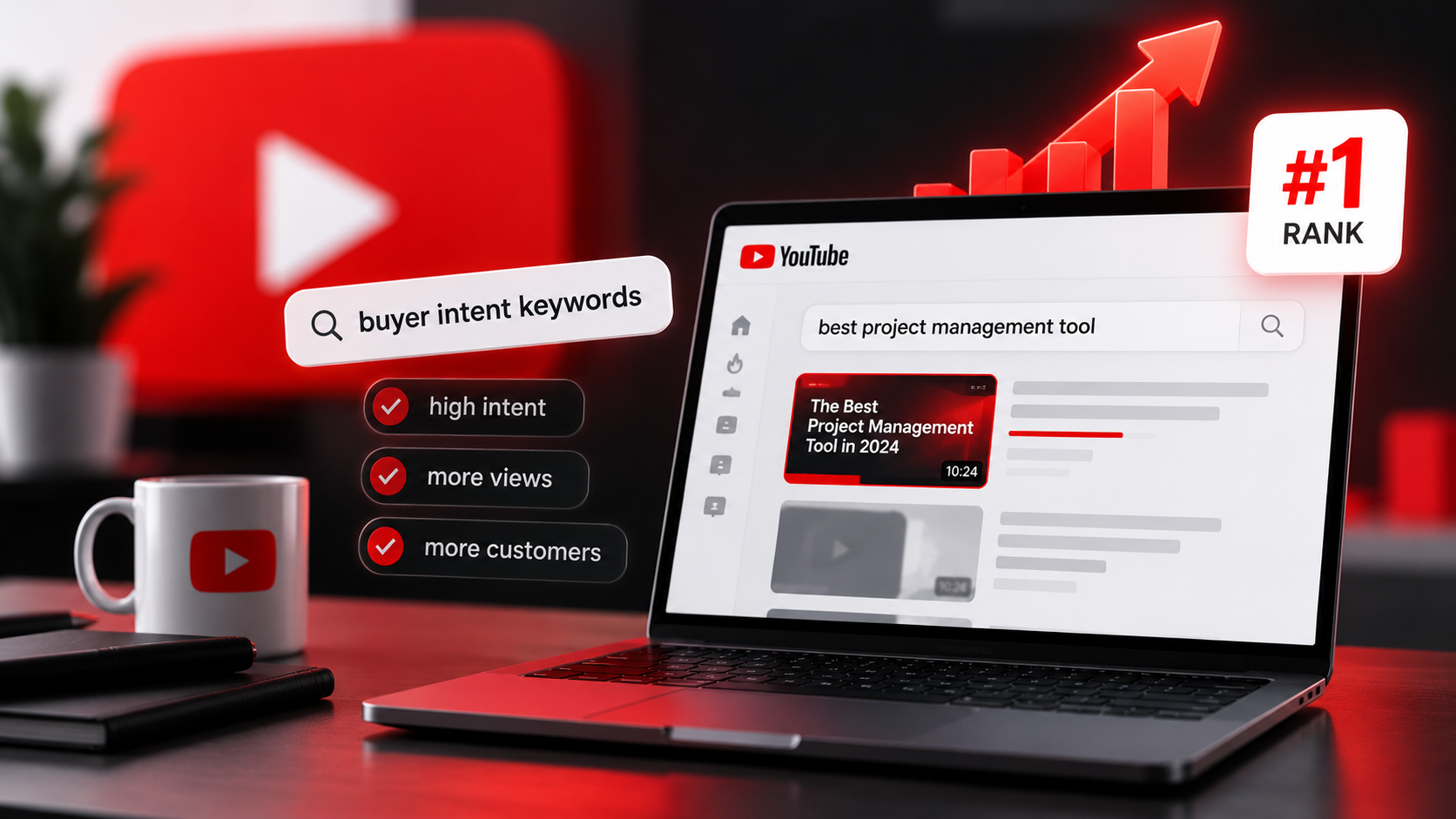
Start by researching high-intent search terms. Use the YouTube search bar’s autocomplete feature to identify what your target audience is actively looking for. If you are creating a tutorial on video editing, don't just title it 'My Editing Process.' Instead, use a title that addresses a specific pain point, such as 'How to Edit Faster in Premiere Pro: A Professional Workflow.' By targeting specific search intent, you capture viewers who are already looking for a solution, which leads to higher watch time and better engagement metrics.
Beyond the basics, your video description should act as a mini-blog post. Include relevant keywords naturally within the first two sentences, as these are the ones that appear in search results. Use timestamps to break your video into chapters; this not only improves the user experience but also allows Google to index specific sections of your video, potentially showing them in search results for specific sub-topics.
The role of closed captions and transcripts
Many creators overlook the power of closed captions. YouTube’s automated speech recognition (ASR) is good, but it is rarely perfect. By uploading your own transcript, you ensure that the algorithm indexes every word spoken in your video. This creates a massive amount of searchable text that the platform can use to understand the nuance of your content, further improving your ranking potential.
What are the most effective YouTube growth services?
When you reach a point where your content quality is high but your growth has plateaued, it is often time to look into professional YouTube growth services. These services generally fall into two categories: strategic consulting and operational support. Strategic consulting involves deep-dive audits of your channel, where experts analyze your retention graphs to identify exactly where viewers are dropping off. Operational support, on the other hand, handles the time-consuming tasks that often get neglected, such as metadata optimization, thumbnail A/B testing, and community management.
At Centrics Media, we emphasize that growth services should never be about 'buying views' or using black-hat tactics. True growth services focus on optimizing the variables you can control: the click-through rate (CTR) and the average percentage viewed (APV). If your CTR is low, your thumbnail and title strategy needs an overhaul. If your APV is low, your pacing, script structure, or editing style is the bottleneck. A professional partner provides the objective data analysis required to fix these specific issues.
| Service Type | Focus Area | Expected Outcome |
|---|---|---|
| Metadata Optimization | SEO, Titles, Descriptions | Increased search and browse traffic |
| Retention Analysis | Scripting, Pacing, Editing | Higher watch time and algorithm favor |
| Thumbnail Strategy | CTR, Visual Hierarchy | More impressions and clicks |
| Community Management | Engagement, Loyalty | Higher subscriber retention |
How do you optimize for audience retention?
Audience retention is the single most important metric on YouTube. If a viewer clicks on your video and leaves after thirty seconds, the algorithm interprets this as a signal that your content is not satisfying the user's intent. To combat this, you must master the 'hook, hold, and payoff' structure.
The hook must occur within the first five to ten seconds. Avoid long, branded intros or slow, conversational warm-ups. Get straight to the value proposition. If you promised a solution in the title, prove that you are going to deliver it immediately. The 'hold' is the body of your video, where you must maintain momentum through visual changes, sound design, and narrative tension. If your video is a talking head, you need to change the visual frame every 10 to 15 seconds, whether through B-roll, text overlays, or zoom cuts. Finally, the 'payoff' is the conclusion where you deliver on the initial promise and provide a clear call to action.
Pro Tip: The 'Retention Dip' Audit
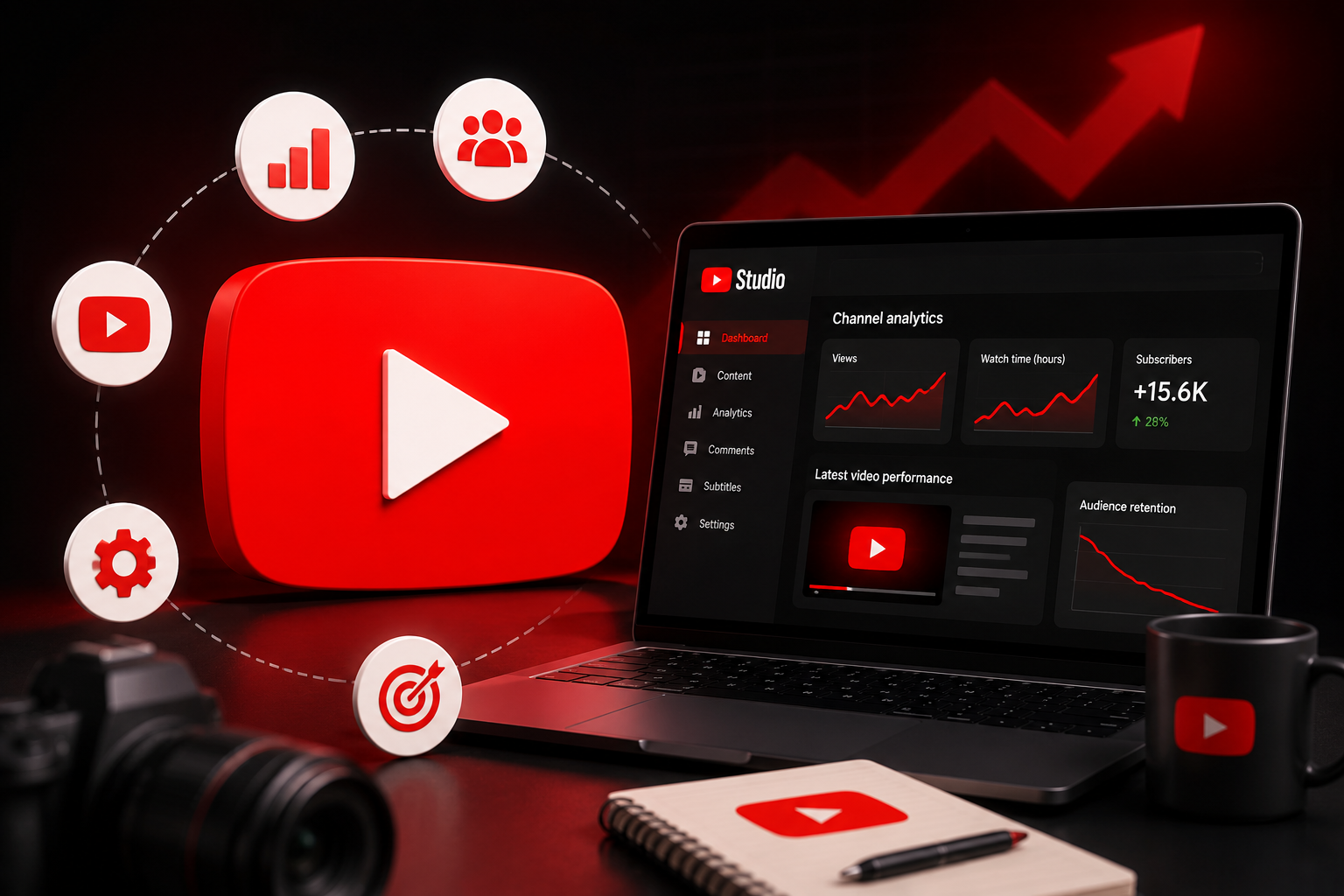
Go into your YouTube Studio analytics and look at the 'Audience Retention' report for your top ten videos. Identify the exact moment where the retention line drops sharply. Is it during a long-winded explanation? Is it when you transition to a sponsor segment? Once you identify these 'dips,' you can adjust your future editing style to eliminate those specific points of friction. This is the fastest way to improve your channel's overall performance.
What is the difference between search-based and browse-based growth?
Understanding the difference between search-based and browse-based traffic is critical for long-term strategy. Search-based traffic comes from people typing queries into the search bar. This is excellent for evergreen content—videos that remain relevant for years, such as 'How to' guides or product reviews. These videos provide a steady, predictable stream of views over time.
Want a free audit of your channel?
Get a personalized growth plan in 48 hours.
Browse-based traffic, however, is what leads to viral growth. This happens when YouTube recommends your video on the homepage or in the 'Up Next' sidebar. This is driven by high CTR and high session duration. To trigger browse-based traffic, your content needs to appeal to a broader audience and have a 'click-worthy' premise. While search builds the foundation of your channel, browse features are what scale it to the next level.
Balancing the two
A healthy channel balances both. You should have a core of evergreen, search-optimized content that acts as a 'library' for new viewers to discover, while your newer, more experimental content targets the browse features. If you only focus on search, you may find your growth is slow and steady but lacks the explosive potential of viral hits. If you only focus on browse, your channel may feel volatile, with massive spikes followed by long periods of inactivity.
Pros and Cons of Outsourcing Channel Management
Deciding whether to manage your channel solo or bring in outside help is a major milestone. Here is how the trade-offs generally break down:
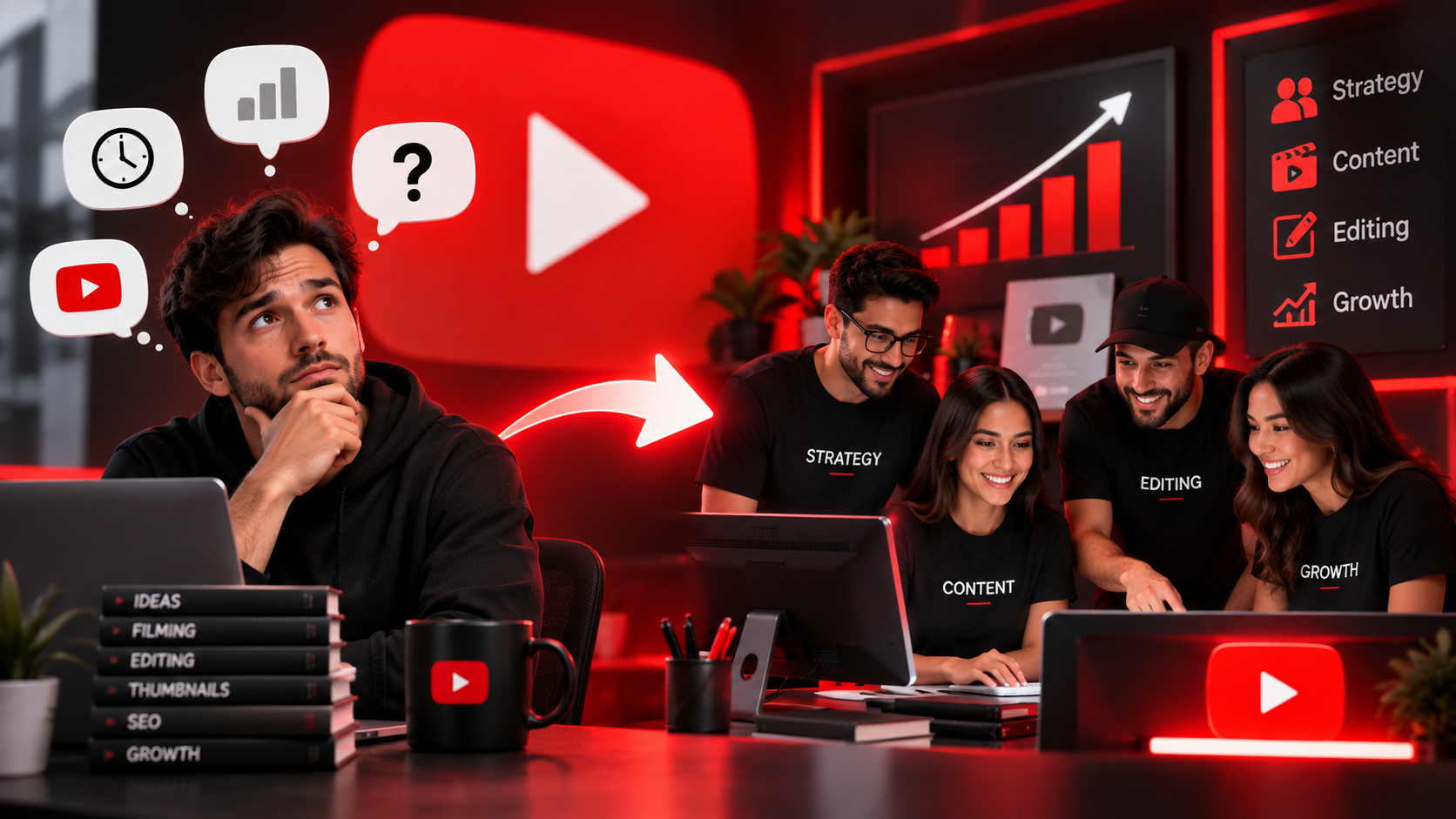
- Pros of Outsourcing: You gain access to specialized skills (SEO, graphic design, data analysis) that you may not have. It frees up your time to focus on the creative aspects of production, which is where your unique value lies. It also provides an objective, third-party perspective that can help you avoid 'creator bias.'
- Cons of Outsourcing: It requires a financial investment. You must also spend time onboarding the partner so they understand your brand voice and audience. If you choose a partner that doesn't align with your goals, you risk diluting your content's authenticity.
Ultimately, the decision should be based on your current stage of growth. If you are still defining your niche, you might want to handle the management yourself to learn the ropes. Once you have a proven format and are looking to scale, outsourcing becomes a strategic lever for growth.
How do you maintain consistency without burnout?
Consistency is often misunderstood as 'uploading every day.' In reality, consistency means meeting the expectations you have set for your audience. If you promise a weekly deep-dive video, your audience expects that video on a specific day. If you miss that window, you break the habit loop you have built with your viewers.
To maintain this without burning out, you must implement a production system. This includes batching your content creation. Spend one day on research and scripting, one day on filming, and one day on editing. By separating these tasks, you reduce the cognitive load of switching between different modes of work. Furthermore, don't be afraid to repurpose content. A long-form video can be broken down into multiple YouTube Shorts, which can help keep your channel active and visible even when you aren't releasing a full-length production.
Frequently Asked Questions
How long does it take to see results from YouTube SEO?
YouTube SEO is a long-term play. While you might see minor improvements in search rankings within a few weeks, significant shifts in traffic usually take three to six months of consistent optimization. The algorithm needs time to gather data on how users interact with your newly optimized metadata before it can reliably rank your content higher.
Is it better to focus on YouTube Shorts or long-form content?
It depends on your goals. Shorts are excellent for rapid subscriber growth and brand awareness, as they are highly discoverable in the feed. However, long-form content is superior for building deep audience trust, community, and monetization potential. Most successful channels use a hybrid approach, using Shorts to funnel viewers into their long-form library.
How often should I change my video thumbnails?
If a video is underperforming despite having high-quality content, changing the thumbnail is one of the most effective 'quick fixes' you can perform. You should monitor your CTR for the first 48 hours after a video release. If the CTR is significantly lower than your channel average, test a new thumbnail design. There is no penalty for updating a thumbnail, and it can often breathe new life into an older video.
What is the most important metric to track in YouTube Studio?
While views and subscribers are vanity metrics, 'Audience Retention' and 'Click-Through Rate' are the true indicators of health. If these two metrics are strong, the algorithm will naturally push your content to more people. Focus your energy on improving these two numbers, and the growth will follow.
Final Thoughts on Scaling
The path to scaling a YouTube channel is rarely about finding a 'secret hack' or a single viral video. It is about the disciplined application of data-driven strategy. By focusing on the mechanics of how the algorithm perceives your content—through optimized metadata, high-retention editing, and a clear understanding of your audience's intent—you create a reliable engine for growth. Remember that every video is a data point; use the information you gather from your analytics to refine your approach, iterate on your formats, and consistently deliver value. When you treat your channel as a professional media asset, you stop guessing and start growing.
If you are ready to take a more analytical and strategic approach to your channel's performance, Centrics Media offers comprehensive support to help you navigate the complexities of modern platform growth. From deep-dive SEO audits to full-scale channel management, we provide the expertise needed to turn your content into a sustainable, high-growth asset.
YouTube Channel Growth
Was this article helpful?
Ready to Grow Your YouTube Channel?
Get a clear strategy tailored to your channel — backed by data from 200+ channels we've scaled.
Book Free Growth Audit