Back to Blog
YouTube seo
YouTube SEO for New Channels: A Practical Growth Guide
Direct Answer
Learn the mechanical reality of YouTube SEO for new channels. Focus on search intent, metadata, and audience retention to build sustainable growth.
What is the most effective approach to YouTube SEO for new channels?
YouTube SEO for new channels is the practice of optimizing your video metadata, including titles, descriptions, and tags, to signal relevance to the search algorithm and encourage clicks from your target audience. For a new channel with zero authority, success relies on matching specific search intent with high-quality content that keeps viewers watching, as the algorithm prioritizes click-through rate (CTR) and average percentage viewed over simple keyword stuffing.
Most creators misunderstand SEO as a way to "trick" the system. It is not. It is a way to communicate clearly with the YouTube recommendation engine so it knows exactly which viewers are most likely to enjoy your content. If you are starting from scratch, your goal isn't to compete with established giants on broad terms like "fitness" or "gaming"; your goal is to find the specific, lower-volume search queries where you can provide the most helpful answer.
Key Takeaways
- Focus on long-tail keywords that represent specific problems your target audience is trying to solve.
- Prioritize high-CTR thumbnails and titles; if no one clicks, your SEO work is invisible.
- Retention is the ultimate metric; SEO gets the viewer to the door, but the content keeps them in the room.
- Consistency in metadata helps the algorithm build a "channel profile" that connects your videos to the right audience segments.
Why should a new channel focus on search intent over broad keywords?
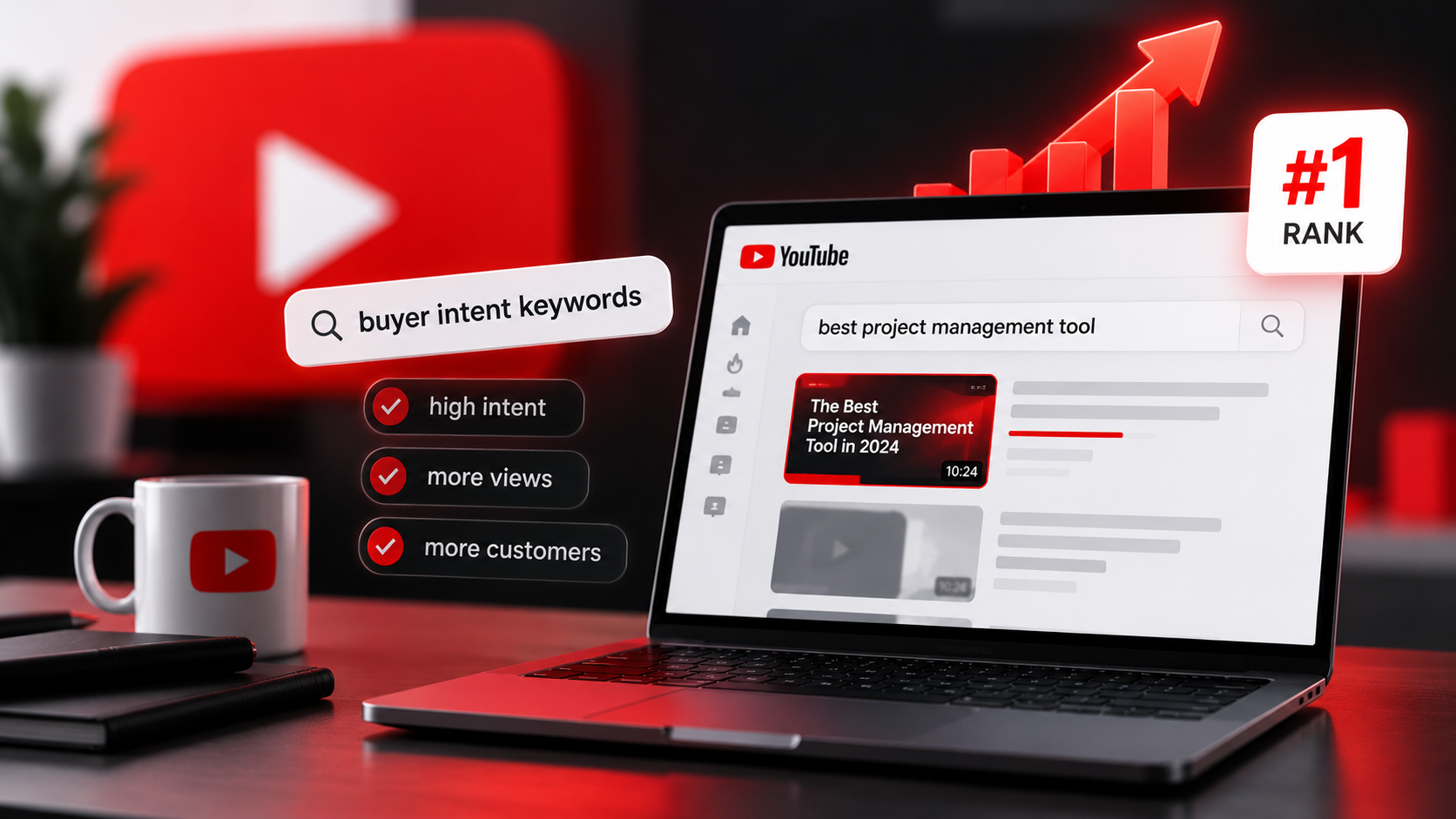
When you are a new channel, you have no "channel authority." YouTube’s algorithm has no historical data on your viewers to know who to suggest your videos to. If you target a broad, high-volume keyword like "how to cook pasta," you are competing against channels with millions of subscribers and thousands of hours of watch time. You will lose that competition every time.
Instead, look for long-tail keywords—phrases that are three to five words long and highly specific. A query like "how to cook pasta for beginners with limited equipment" has lower search volume, but the search intent is incredibly clear. If your video provides a direct, useful answer to that specific problem, the viewer is far more likely to watch the entire video. This high retention signals to YouTube that your video is high-quality, which triggers the algorithm to test your content against a slightly larger, broader audience.
This process of "climbing the ladder" is how growth works. You start by ranking for very specific queries, building a small but loyal base of viewers who actually watch your content. As your average percentage viewed increases, YouTube gains confidence in your channel, allowing you to gradually target more competitive, broader terms. If you need help identifying these specific opportunities, our YouTube growth services are designed to pinpoint the exact search gaps in your niche.
How does YouTube actually "read" your video metadata?
YouTube does not just look at your tags. In fact, tags are the least important part of your metadata today. The algorithm relies primarily on three things to understand your video: your video file name, your title, and your spoken audio.
Before you even upload, name your video file something descriptive. Instead of "Final_Cut_01.mp4," name it "how-to-fix-leaky-faucet-beginner.mp4." This is a minor signal, but it is one of the first things the bot sees.
Once the video is uploaded, YouTube’s speech-to-text technology transcribes your video automatically. The words you say in the video are indexed. If your title is "Best Tips for Gardening" but you never actually talk about gardening tips, the algorithm will detect the mismatch and lower your ranking. Your metadata must be a literal reflection of the content within the video. If you are creating a tutorial, ensure your spoken content explicitly addresses the keywords you are targeting in the first 60 seconds.
Pro Tip: Never read a list of keywords in your description. Write a natural, three-to-four sentence paragraph that explains exactly what the viewer will gain from watching. Use your target keyword once, naturally, in that summary. The goal is to help a human understand what the video is about, which in turn helps the bot categorize it correctly.
What is the role of CTR and retention in SEO?
SEO is the bridge, but CTR (Click-Through Rate) and retention are the traffic. Even if you rank #1 for a popular search term, if your thumbnail is unappealing or your title is boring, no one will click. If they do click but leave after five seconds, YouTube will stop ranking your video because it concludes that your content does not satisfy the search intent.
CTR is a measure of how attractive your package is. A high CTR tells YouTube, "People are interested in this topic." Retention is a measure of how good the product inside is. High retention tells YouTube, "This video provides a satisfying answer to the search query." If you have both, your video will be pushed into browse features and suggested videos, which is where true channel growth happens.
We often see creators obsessed with the perfect title but ignoring the fact that their video drops 40% of its audience in the first 30 seconds. That drop-off is a clear signal to the algorithm that the video failed to deliver on the promise of the title. If you are struggling with your content performance, our YouTube channel management team helps creators audit their retention curves to stop these leaks.
Is there a difference between "Search" and "Suggested" traffic?
Yes, and they serve different purposes for a new channel. Search traffic is intentional. A user is looking for a solution. If you rank in search, you are providing a utility. This is the foundation of a new channel because it is the most predictable way to get views without an existing audience.
Suggested traffic, however, is where scaling happens. This is when YouTube places your video on the sidebar or home page of someone who is watching a similar video. You cannot "SEO" your way into Suggested traffic directly. Instead, you earn it by having high CTR and high retention on your Search-driven videos. Once YouTube sees your video is "sticky" (meaning people watch it and then stay on the platform), it will start suggesting your content to others interested in that niche.
Want a free audit of your channel?
Get a personalized growth plan in 48 hours.
| Metric | Impact on SEO | Growth Lever |
|---|---|---|
| CTR | High | Thumbnail and Title Iteration |
| Retention | Critical | Hook and Pacing |
| Search Volume | Medium | Keyword Research |
How do you perform keyword research without expensive tools?
You don't need a $200/month software suite to find keywords. YouTube’s own search bar is the most powerful tool you have. Start typing a query related to your niche, like "how to start a garden," and look at the autocomplete suggestions. These suggestions are real queries that people are typing into YouTube right now.
Take those suggestions and put them into a spreadsheet. Group them by intent. Are people looking for tutorials? Product reviews? Comparisons? If you search for "best gardening tools for beginners" and see five videos from channels with under 10k subscribers, you have found a "goldilocks" topic: it has enough search demand to be worth your time, but low enough competition that a new channel can actually rank for it.
Avoid keywords that are too broad. If you are a new channel, "gardening" is a category, not a keyword. "How to plant tomatoes in containers" is a keyword. The more specific you get, the easier it is to dominate that small, dedicated slice of the audience. Once you dominate that slice, move to the next one.
What are the common pitfalls in YouTube SEO?
The most common mistake is keyword stuffing. This is the practice of listing dozens of keywords in your description or tags in the hopes of tricking the algorithm. It does not work. In fact, it can backfire because it provides the algorithm with conflicting signals about what your video is actually about. Keep your metadata focused, relevant, and clean.
Another pitfall is inconsistency. If you make one video about gardening, one about gaming, and one about cooking, the algorithm will never be able to categorize your channel. It won't know who your audience is. For a new channel, you need to pick a lane and stay in it for at least 20-30 videos. This allows the algorithm to build a "viewer profile" for your channel—a group of people who are likely to watch your next video because it is similar to the ones they already enjoyed.
Lastly, do not ignore your "end screens" and "playlists." These are often overlooked parts of SEO. If a viewer finishes your video, you want them to watch another one of yours. By organizing your videos into playlists with SEO-friendly titles, you increase the likelihood that a viewer will binge your content. The more videos a viewer watches in a single session, the more the algorithm favors your channel.
Why does niche-specific authority matter?
YouTube is not a general-purpose search engine like Google; it is an interest-based platform. When you upload a video, the algorithm tests it against a small "seed audience." If that audience engages, it expands the test to a larger group. If you are an authority in a specific niche, your seed audience is much more likely to engage, which makes the algorithm's job easier.
If you jump between niches, you confuse the seed audience. If you target a gardening audience with a cooking video, they will ignore it. Your CTR will plummet, and the algorithm will assume your content is bad. This is why niche-specific SEO is the only viable path for new creators. You are building a reputation with the algorithm, one viewer at a time.
If you find that your channel is stuck, it might be because you have lost that niche focus. We often help clients audit their back-catalog to see which topics actually resonate with their core audience and which are just "noise" that might be hurting their overall channel performance. You can read more about our approach to YouTube strategy to see how we help channels find and maintain their unique competitive advantage.
Wrap-up: The Long Game of SEO
SEO is not about getting a quick spike in views today. It is about building a library of content that serves as a permanent, searchable asset for your channel. Every video you optimize correctly is a "digital employee" that works to bring in new viewers while you sleep. Focus on the basics: clear titles, helpful descriptions, and content that actually delivers on the promise you made to the viewer. When you combine those elements with a consistent, niche-focused approach, growth becomes a matter of time rather than luck.
Frequently Asked Questions
How long does it take for YouTube SEO to show results?
You can expect to see initial traction from search-optimized content within 48 to 72 hours of publication, though it often takes 3 to 6 months for a new channel to build enough authority to rank consistently for competitive terms.
Should I use tags in my YouTube videos?
Tags have minimal impact on your rankings today and are essentially a legacy feature, so you should focus your time on writing a high-quality, keyword-rich description and a compelling title instead.
Does the length of a video affect its SEO ranking?
There is no "ideal" length for SEO; the best length is the shortest amount of time required to fully answer the user's search query while maintaining high viewer retention.
How many keywords should I include in my video title?
Stick to one primary, high-intent keyword phrase per title to ensure the algorithm and the viewer clearly understand the video's focus without it appearing like spam.
If you are ready to move beyond the basics and want a professional team to manage your channel's growth, reach out to Centrics Media. We specialize in turning new channels into authority figures through data-driven strategy and execution.
YouTube seo
Was this article helpful?
Ready to Grow Your YouTube Channel?
Get a clear strategy tailored to your channel — backed by data from 200+ channels we've scaled.
Book Free Growth Audit