Back to Blog
YouTube Seo
YouTube SEO: The Reality of Ranking in 2026
Direct Answer
YouTube SEO is the process of optimizing metadata, retention, and engagement signals to ensure the algorithm surfaces your content to the right viewers.
What is YouTube SEO and how does it actually function?
YouTube SEO is the process of optimizing your video metadata, channel authority, and engagement signals to ensure the platform’s recommendation engine surfaces your content to the most relevant viewers. Unlike traditional search engines that prioritize keyword density, YouTube’s algorithm prioritizes watch time, session duration, and click-through rate (CTR) as the primary indicators of video quality. When you optimize for YouTube, you are essentially providing the algorithm with the necessary data points to categorize your content accurately so it can be matched with a specific audience profile.
Most creators treat YouTube SEO as a simple exercise in stuffing keywords into a description box. This is a fundamental misunderstanding of how the platform operates. The algorithm doesn't just read your text; it analyzes the video file itself, the audio transcript, and the behavior of the users who interact with your content. If you title a video "How to fix a leaky faucet" but the audience drops off after 15 seconds because the video is actually a vlog about your weekend, the algorithm will stop recommending that video, regardless of how well-optimized your keywords are. The metadata acts as the initial signal, but the user experience acts as the final judge.
Key Takeaways
- YouTube SEO is primarily about signaling relevance to the algorithm, not just keyword placement.
- Retention metrics and CTR are the ultimate arbiters of whether your SEO efforts succeed.
- The algorithm treats your channel as a collection of data points; consistency in topic helps the system categorize your audience.
- Metadata (titles, descriptions, tags) provides the initial context, but user behavior confirms it.
Why does the algorithm prioritize retention over keywords?
The primary goal of YouTube is to keep users on the platform for as long as possible. If a video has perfect keyword optimization but fails to hold a viewer's attention, it is objectively failing the platform's core business model. This is why retention is the single most important metric in your analytics dashboard. When you look at your retention graph, you aren't just looking at a line; you are looking at the effectiveness of your content structure.
Consider a 10-minute video. If your audience drops by 40% in the first 30 seconds, the algorithm interprets this as a mismatch between the promise (the title/thumbnail) and the delivery (the content). This is a failure of SEO at the packaging level. Conversely, if your retention remains flat or dips only slightly, the algorithm identifies that your video is "sticky." It will then begin testing your content against broader audiences, starting with your subscribers and moving to "browse" and "suggested" traffic.
This is where YouTube growth management becomes essential. You need to understand that your SEO strategy must align with your content strategy. If you are producing content that doesn't satisfy the intent of the search query, no amount of technical optimization will save your rankings. The algorithm is constantly learning from user behavior, and it is far more sophisticated than a simple text-matching bot.
How do you perform effective keyword research for YouTube?
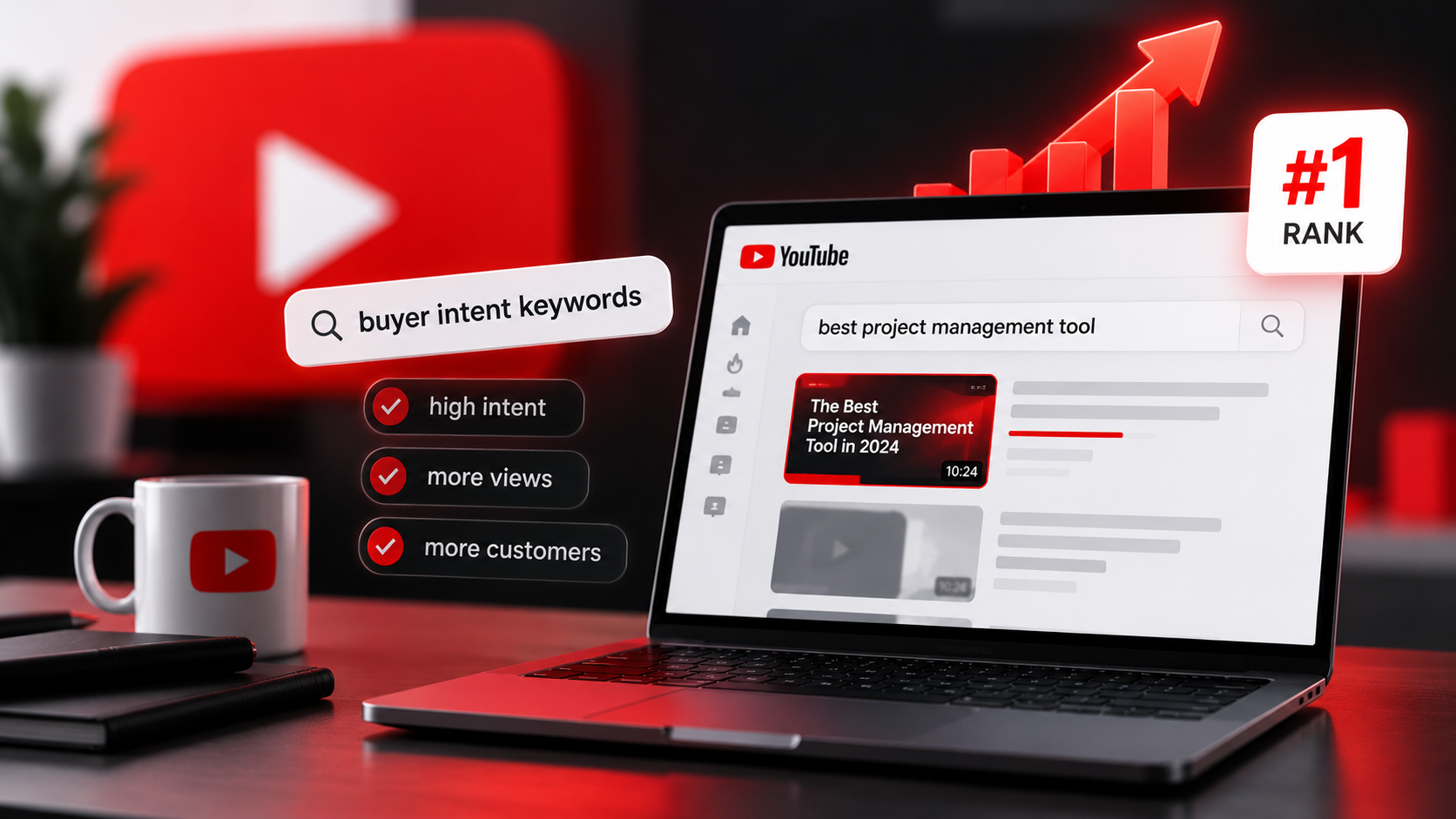
Keyword research for YouTube should start with the search bar itself. When you type a query into the YouTube search box, the autocomplete suggestions are a direct reflection of what real users are currently searching for. These are not random; they are high-volume, high-intent queries that the platform is already validating. Use these suggestions to build your video topics, not just your titles.
Beyond the search bar, you should look at the "Search Terms" report in your YouTube Studio analytics. This report tells you exactly what people are typing to find your channel. If you see a term that you haven't created a dedicated video for, that is your next content opportunity. This is a far more effective way to grow than guessing what your audience wants. You are essentially letting the data dictate your production schedule.
Expert Insight: Don't optimize for the highest volume keyword if your channel is small. High-volume keywords are usually dominated by established channels with high authority. Instead, target "long-tail" keywords—phrases with 3-5 words that are more specific. You are much more likely to rank for "best budget camera for YouTube vlogging" than just "camera."
What is the role of metadata in modern YouTube SEO?
Metadata includes your title, description, tags, and even the filename of the video you upload. While tags have become less important over the years, titles and descriptions remain critical for providing context. Your title should be compelling enough to drive a high CTR, but it must also contain the primary keyword to help the algorithm categorize the video. Avoid clickbait that misrepresents the content, as this will lead to a high bounce rate, which effectively kills your video's performance.
Your description should be at least 200 words long and include the primary keyword in the first two sentences. This helps the algorithm understand the topic immediately. Use the rest of the description to provide context, include timestamps, and link to related videos or your own professional video production services. Timestamps are particularly useful because they allow Google to index specific sections of your video, effectively creating "chapters" that can appear in Google search results, not just YouTube.
How does CTR impact your search ranking?
CTR (Click-Through Rate) is the gatekeeper of your video's success. If your video ranks for a keyword but nobody clicks on it, the algorithm will demote it in favor of videos that generate more clicks. Your thumbnail is the most important element of your CTR. It needs to be clear, high-contrast, and visually distinct from the other videos in the search results. If you are competing with 10 other videos on a search page, your thumbnail needs to stand out immediately.
A common mistake is thinking that a high CTR is always good. If you have a 15% CTR but a 10% retention rate, your thumbnail is misleading. You are getting the click, but you aren't delivering on the promise. This is a "bad" high CTR. You want a high CTR coupled with high retention. This combination signals to the algorithm that your video is exactly what the user was looking for, which is the ultimate goal of YouTube SEO.
Want a free audit of your channel?
Get a personalized growth plan in 48 hours.
Is there a difference between Search and Suggested traffic?
Yes, and it is a massive one. Search traffic is intent-driven; the user is looking for a specific answer. Suggested traffic is discovery-driven; the user is browsing and the algorithm thinks they might like your video based on their past behavior. SEO helps you capture search traffic, but your ability to keep them watching determines if you get suggested traffic.
When you optimize for search, you are playing the long game. A well-optimized video can continue to bring in views for years. When you optimize for suggested traffic, you are playing the "virality" game. You need to focus on high-CTR thumbnails and hooks that grab the viewer's attention immediately. Most successful channels balance both. They use search-based content to build a foundation of evergreen traffic and discovery-based content to reach new, broader audiences.
How do you handle niche-specific dynamics?
Every niche has its own "language" and search behavior. In the tech niche, viewers are looking for specs, comparisons, and "best of" lists. In the gaming niche, they are looking for walkthroughs, tips, and entertainment. Your SEO strategy must adapt to these dynamics. If you are in a highly competitive niche, you cannot rely on broad keywords. You must find the sub-niches where you can establish authority.
For example, if you run a fitness channel, don't just target "weight loss." That is too broad. Target "weight loss for busy professionals over 40." This is a specific audience with specific pain points. By creating content that addresses these specific needs, you are more likely to build a loyal audience that watches your videos to the end, which in turn boosts your channel's overall authority in the eyes of the algorithm.
What is the impact of channel authority?
Channel authority is the cumulative effect of your history on the platform. If you have a history of publishing high-retention, high-engagement videos, the algorithm will trust your new uploads more. This is why established channels often rank faster for competitive keywords than new channels. You are building "trust" with the algorithm over time.
Do not get discouraged if your initial videos don't rank. You are in the process of training the algorithm to understand what your channel is about. The more consistent you are with your topic and your audience, the faster you will build this authority. This is why we often advise clients to focus on a single, well-defined niche for at least the first 50-100 videos.
Frequently Asked Questions
How long does it take for YouTube SEO to show results?
YouTube SEO is a long-term strategy, and you should expect to see meaningful shifts in search traffic within 3 to 6 months of consistent, optimized publishing. While some videos may rank immediately, the algorithm needs time to gather enough data on viewer behavior to trust your content for competitive search terms.
Do hashtags in the description actually help with SEO?
Hashtags have a minimal impact on search rankings and are primarily used for categorization and discovery in the "hashtag pages" feature. Including 3-5 relevant hashtags at the bottom of your description is a best practice for organization, but they should not be your primary focus for SEO.
Should I update old videos to improve their SEO?
Updating the titles, thumbnails, and descriptions of older, underperforming videos can significantly improve their performance if the underlying content is still relevant. If a video has a high retention rate but a low CTR, changing the thumbnail and title is often enough to "re-launch" the video and capture new traffic.
Does the length of a video affect its SEO ranking?
Video length itself is not a ranking factor, but it is a proxy for watch time, which is a major ranking factor. Longer videos have the potential to accumulate more total watch time, but if the content is thin and causes viewers to drop off, the algorithm will penalize the video regardless of its length.
Effective YouTube growth requires a blend of technical precision and creative strategy. If you are ready to stop guessing and start scaling your channel with data-backed decisions, our team at Centrics Media is here to help. We specialize in turning underperforming channels into authority hubs through rigorous optimization and content management.
YouTube Seo
Was this article helpful?
Ready to Grow Your YouTube Channel?
Get a clear strategy tailored to your channel — backed by data from 200+ channels we've scaled.
Book Free Growth Audit